Trending events
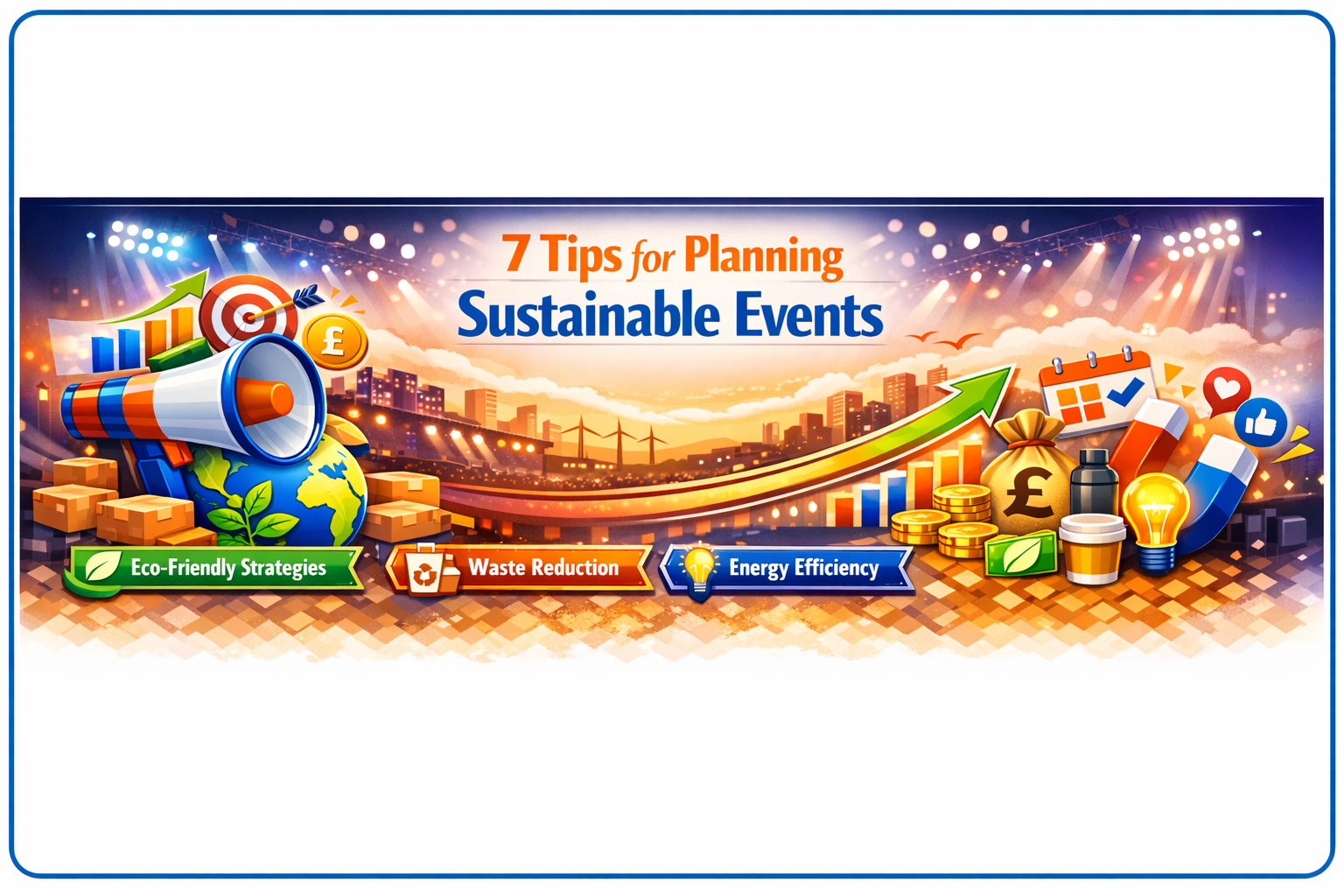
Sustainability is no longer just a trend—it’s a responsibility. Event organizers today are expected to reduce environmental impact while still delivering memorable experiences. From conferences and concerts to exhibitions and community gatherings, sustainable event planning helps protect the planet and enhances your brand image.
Here are 7 practical tips for planning sustainable events without compromising on quality or guest experience.
Start by selecting a venue that supports sustainability initiatives. Look for places that use renewable energy, practice waste segregation, offer energy-efficient lighting, and have water-saving systems. Venues close to public transport also help reduce carbon emissions from travel.
Reduce paper waste by switching to digital solutions. Use online ticketing, e-passes, QR-code check-ins, digital event schedules, and email communication instead of printed materials. Digital platforms also make event management faster and more efficient.
Minimize waste by avoiding single-use plastics and unnecessary packaging. Use reusable banners, signage, décor, and furniture. Place clearly labeled recycling and compost bins across the venue to encourage responsible waste disposal.
Work with vendors who follow eco-friendly practices. Choose caterers who source local and seasonal ingredients, avoid plastic cutlery, and minimize food waste. For event merchandise, opt for sustainable materials like recycled fabric or biodegradable items.
Food waste is a major contributor to event pollution. Plan your menu carefully based on attendee numbers. Offer vegetarian and vegan options, as plant-based meals have a lower carbon footprint. Donate excess food to local charities whenever possible.
Promote public transport, carpooling, cycling, or shuttle services for attendees and staff. Share clear travel information in advance to reduce unnecessary vehicle usage. If possible, choose venues near hotels to minimize travel distance.
Track your event’s environmental footprint by measuring energy use, waste generated, and carbon emissions. Collect feedback and analyze what worked well. Use these insights to improve sustainability efforts in your future events.
Planning sustainable events is not just good for the environment—it’s good for your brand, your audience, and your future. By making thoughtful choices and adopting eco-friendly practices, you can create impactful events that leave lasting memories without harming the planet.
Start small, stay consistent, and make sustainability a core part of your event planning strategy. Visit to: ticketkart.